This work is licensed under a Creative Commons Attribution-NonCommercial-NoDerivatives 4.0 International License.

To subscribe to the audio version of the podcast, go to spotify, podcastAddict, podcastIndex, podChaser, Deezer, pocketcast, ListenFM or ListenNotes and search for “Minds between Languages”. If you do not want to use any of these, please go to archive.org.
- Disentangling cognitive and emotional load
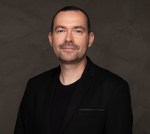 Interpreters are not passive recipients of stress; they actively manage it. – Alper Kumcu
 - The hearts and minds of translators and interpreters
 Emotions shape how we pay attention, how we remember, how we make decision. If we want to know how translation works, we can’t ignore emotions. – Ana María Rojo López
 - Modelling competence levels in written translation
 “We all know what it means to have a C1 in Portuguese. But wouldn’t it be great if we could also say ‘I have a C1 in technical translation from English to Spanish’?” Patricia Rodríguez-Inés, senior lecturer
 - Investigating “interpreter advantage”
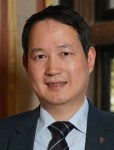 “Our research shows that cognitive abilities can be developed during early stages of interpreter training, so they should not be seen as something you need before you can start interpreting.” Prof. Binghan Zhen
 - Visual input and interpreting
 “In remote interpreting the visual input is more complex. Still, interpreters are very successful in navigating the visual environment.” Assoc. prof. Agnieszka Chmiel
 - Global English: interpreting non-native speakers
 “Interpreters invest extra effort when they interpret non-native speakers, not only for better understanding the source text, but also to improve it.” Prof. Michaela Albl-Mikasa
 - Translating in ‘default mode’
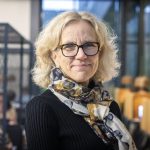 “The idea of Default translation is not that formal similarity of any kind makes it easier. It is just that some translation solutions become more routinised.” Prof. Sandra Halverson
 - Neuroimaging techniques in Cognitive Translation and Interpreting Studies
 “I believe if we understand how our brain works, it will put us in a better position to design a curriculum for our students.” Prof. Defeng Li
 - Methods we live by
 “Research is not just about the methods. It’s also a theory that I apply and the question I want to ask. It all needs to fit together.” Assoc. Prof. Elisabet Tiselius
 - The multilingual brain
 “The bilingual mind is not the exception, quite the contrary. So studying the bilingual mind is not looking at a footnote in the textbook of linguistics, but at what typifies languages for the vast majority in the world.” Adolfo García
 - Publishing CTIS research
 “Sharing honestly – that is what strengthens a research community. It’s the kind of openness and generosity where you don’t tell only the success stories, you tell the whole process. The more we can do it, the better output we’re going to get.” Prof. Fabio Alves
 - Embodied cognition in translator education
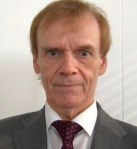 “Your cognition is not just that of an individual sitting there performing an act of translation. There are so many factors intervening, shaping, affecting, undermining or promoting that cognition that have to be taken into account.” Prof. Gary Massey
 - Exploring cognition in public service interpreting
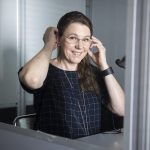 “The dialogue interpreter is like the central executive of the dialogue: they need to make sure they understand and are understood by the others, but also that everybody has access to the conversation.” Assoc. prof. Elisabet Tiselius
 - Human-centred augmented translation
 “Talking about augmentation in translation, I think we need a system serving translators instead of translators serving the system.” Prof. Sharon O’Brien
 - Cognitive processing of subtitles in AVT
 “What amazes me is that we can process really difficult things like an audiovisual text where you have to integrate spoken and written speech, soundtrack, the moving images, and make sense of it.” Prof. Jan-Louis Kruger
 - The workings of the bilingual mind in translation
 “Translation has a mission. Many non-professional translators and interpreters work without being paid or recognized, especially in crisis situations. Translation pedagogy could help them to cope with the demands of being a mediator.” Prof. Bogusława Whyatt
 - Sketching out cognition in interpreting
 “As regards interpreting studies, it is quite clear to me from bibliographical data that if Interpreting Studies has developed and prospered, it is thanks to the interest of practisearchers, not of academics from cognate disciplines.” Prof. emeritus Daniel Gile
 - Trends and problems in cognitive translation and interpreting studies
 “Just because something has been published once, it doesn’t mean that it is the definite and final answer. One study cannot prove anything. Replication studies can help us to validate earlier findings.” Assoc. Prof. Christopher Mellinger
 - Field, body, and context in translation research
 “Translation is carried out in global supply chains. We need to study these processes empirically to understand their consequences for translators and interpreters.” Prof. Hanna Risku
 - The neurobiology of simultaneous interpreting
 “Interpreters are a heterogenous group, multilinguals, too. There are lot of individual differences. So there are a lot of ways to be an interpreter or a multilingual.” Assist. Prof. Laura Babcock
 - Of humans and machines
 “The choice between machine translation and human translation depends on many parameters. What do you need the text for? How predictable is the text? How severe are the implications of errors and imprecisions?” Prof. Michael Carl
 - Translation competence and cognition
 “The description of performance levels in translation is essential to establish a common framework for the education and the professional practice of translators. ” Prof. Amparo Hurtado Albir
 - Pragmatics and the translator´s mind
 “We are part of a network. And as network we can grow together and offer some very valuable thoughts and insights to the community at large.” Prof. Fabio Alves
 - The interpreter´s mind
 “The most important thing that I have learned is that the human mind is highly malleable throughout a person’s life span.” Prof. Min-hua Liu
 - Windows to the (translating) soul
 “Research has definitely opened up some interesting questions. You look at some data and maybe answer one or two questions, but you also end up with ten more questions.” Assoc. Prof. Kristian Tangsgaard Hvelplund
 - Past, present and future of cognitive TIS
 “Many of our lines of thought come from other disciplines. And that is only right: a language theory isolated from what anthropologists or sociologists think of the language wouldn’t make any sense.” Prof. Ricardo Muñoz
 - Cognitive load and ergonomics
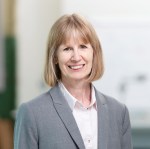 “We are brains within bodies. There are very few people whose bodies are so trapped that they can’t move. Those of us who can move tend to think with the whole body.” Maureen Ehrensberger-Dow
 - Meet the team
 Meet the team of Mind between Languages! Host: Dr. Adolfo M. García, Post-production: Dr. Nataša Pavlović, Audio podcast: Dr. Anne Catherine Gieshoff
 - Universals and translation
 “Be curious about learning from our discipline, but also other neighbouring disciplines.” Prof. Silvia Hansen-Schirra
 - Keylogging and the translator’s mind
 “What makes translation such a fascinating discipline, is that it opens your mind to so many ways of experiencing this wonderful world.” Prof. emeritus Arnt Lykke Jakobsen
Click here to learn more about our privacy policy and to access the site notice.
 MINDS BETWEEN LANGUAGES